

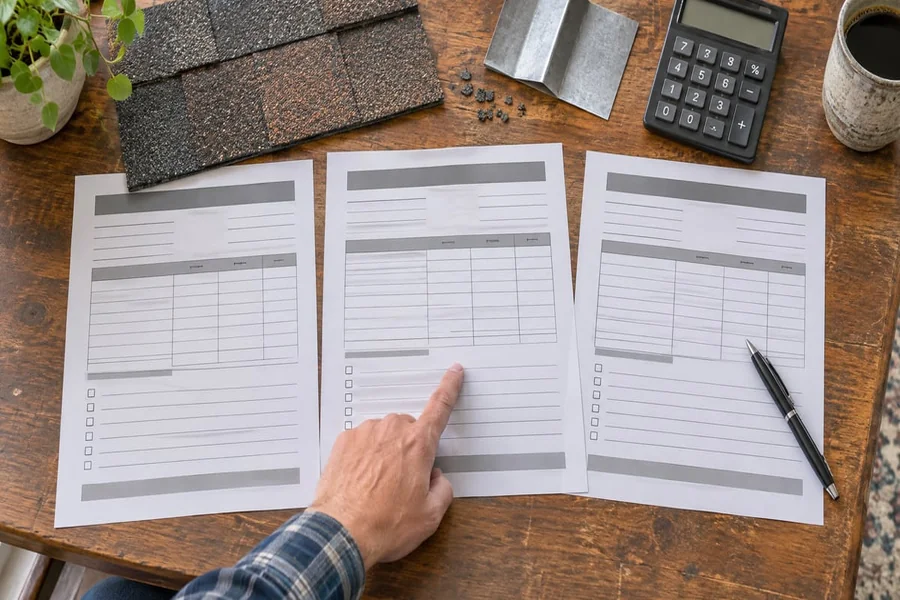
Getting three roofing estimates is standard advice. The trouble starts when those three estimates land on your kitchen table and look nothing alike. One is a single page with a total at the bottom. Another runs four pages with terms you have never heard. The third is somewhere in between, and the prices are far apart.
The lowest number is not automatically the best deal, and the highest is not automatically the best roof. What matters is what each contractor is actually promising to do. The only way to know that is to read each estimate line by line and line them up side by side.
A good starting point is to look at how established local roofers describe their process and materials online. Browsing a contractor site such as the hof roofing website can give you a sense of the terms and components a thorough estimate should cover, so you know what to look for when the paperwork arrives.
Start With the Scope of Work
The scope is the foundation of every estimate. It should spell out exactly what the crew will do, in plain language. Look for:
– Which roof sections are included (main house, garage, porch, additions)
– Whether the job is a full replacement, a partial replacement, or a repair
– The total roof area, usually measured in “squares” (one square equals 100 square feet)
If one estimate measures your roof noticeably larger or smaller than the others, ask why. Differences in measurement can explain a big chunk of the price gap.
Tear-Off or Overlay
Some contractors propose installing new shingles over the old layer. Others include a full tear-off down to the roof deck.
A tear-off costs more but lets the crew inspect the decking, replace damaged wood, and install new underlayment. An overlay hides whatever is underneath. Many building codes limit how many layers a roof can have, and some manufacturers restrict warranty coverage on overlays. If estimates differ on this point, you are not comparing the same job.
Materials Named by Brand and Product Line
“Architectural shingles” is not a specification. A solid estimate names the manufacturer and the exact product line, plus the color. This matters because shingle lines within the same brand can differ in thickness, wind rating, and warranty terms.
Also check whether the estimate lists matching accessory products, such as starter strips, hip and ridge caps, and underlayment from the same manufacturer. Some manufacturer warranties require a system of compatible components.
Underlayment and Ice Protection
Underlayment sits between the roof deck and the shingles. The estimate should say what type is being used (synthetic or felt) and where.
In Northeast Ohio, where lake-effect snow and freeze-thaw cycles are common, ice and water shield along the eaves is especially important. Look for details on:
– How far up from the eaves the ice and water barrier extends
– Whether it is installed in valleys and around penetrations
– What covers the rest of the deck
Vague language like “underlayment as needed” leaves too much room for interpretation.
Flashing: Replace or Reuse
Flashing is the metal that seals the joints around chimneys, walls, skylights, and vents. It is one of the most common sources of leaks.
Some contractors replace all flashing during a reroof. Others reuse existing step flashing or chimney flashing if it looks sound. Reusing is not always wrong, but you should know which approach each estimate takes. Ask specifically about:
– Step flashing along sidewalls
– Chimney flashing and counter-flashing
– Pipe boots and vent collars
– Drip edge along the eaves and rakes
Ventilation
A roof replacement is the ideal time to correct attic ventilation. The estimate should state what ventilation is being installed, such as ridge vents, box vents, or intake vents at the soffits. If one bid includes ventilation upgrades and another says nothing, that is a meaningful difference in both price and long-term performance.
Decking Allowance
No one can see the condition of the roof deck until the old shingles come off. Because of that, most estimates include a decking allowance or a per-sheet price for replacing damaged plywood or OSB.
Compare these carefully:
– Is a certain number of sheets included in the base price?
– What is the per-sheet charge after that?
– Will you be shown the damaged wood before it is replaced?
A very low bid with a high per-sheet charge can end up costing more than a higher bid with a fair allowance.
Cleanup, Permits, and Disposal
Roof tear-offs create a lot of debris, including nails. A good estimate addresses:
– Dumpster or disposal costs
– Protection for landscaping, siding, and windows
– Magnetic sweeping for nails in the yard and driveway
– Who pulls the building permit, if one is required in your municipality
If a contractor suggests skipping the permit, take that as a warning sign.
Warranties: Two Kinds
Every roof should come with two types of coverage. The manufacturer warranty covers the materials. The workmanship warranty covers installation errors, which cause many roof failures. Compare how long each lasts, what it covers, and whether it transfers to a future buyer. Ask to see the workmanship warranty in writing.
Payment Schedule
Read the payment terms as carefully as the scope. Reasonable schedules usually tie payments to clear milestones, such as material delivery and job completion. Be cautious if a contractor asks for most of the money before work begins. A large upfront deposit gives you little leverage if the job goes wrong or never starts.
Red Flags to Watch For
After hail and windstorms, out-of-town crews often appear in neighborhoods, knocking on doors. Some are legitimate, but many leave once the storm work dries up, which makes warranty service difficult. Be wary of:
– Pressure to sign the same day
– Estimates with no business address or local phone number
– No proof of liability insurance or workers’ compensation
– Offers to “cover your deductible,” which may be illegal in some states
– Cash-only payment requests
– Prices that are far below every other bid with no clear explanation
Putting It All Together
Make a simple comparison chart with each contractor in a column and each item above in a row. Fill in what each estimate says, and mark anything missing. Gaps become obvious fast, and they make great questions for your follow-up calls.
Once the estimates are truly comparable, the price differences usually make more sense. Pick the contractor whose estimate is clear, complete, and backed by a business you can reach years from now. That is what keeps a new roof from turning into an expensive lesson.
